
Why Overload Relays Trip in Motor Control (Causes, Working & Fixes)
In any motor control system, protection is just as important as operation. While devices like fuses and circuit breakers safeguard against short-circuits, another equally important device—the overload relay—protects motors from damage caused by excessive running current.
MOTOR AND CONTROL
ELEKTERCA
8/18/2025
Understanding Overload Relays in Motor Control
In any motor control system, protection is just as important as operation. While devices like fuses and circuit breakers safeguard against short-circuits, another equally important device—the overload relay—protects motors from damage caused by excessive running current.
In this article, we’ll break down what an overload relay is, how it works, and why it is essential in motor control systems such as the Direct-On-Line (DOL) starter.
What is an Overload Relay?
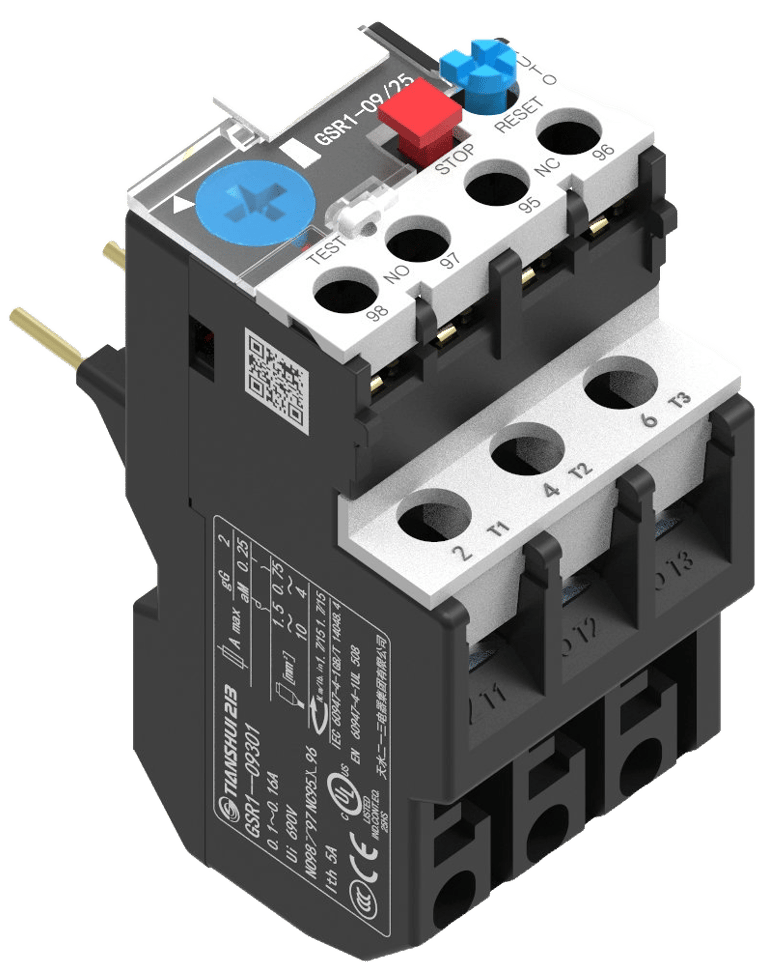
An overload relay is an electromechanical or electronic protective device designed to protect an electric motor from overheating due to prolonged overloads.
Unlike a fuse (which reacts instantly to very high fault currents), the overload relay allows the motor to handle short bursts of high current during startup but trips if the overload persists.
It is usually connected in series with the motor and integrated into the starter circuit.
Types of Overload Relays
Thermal Overload Relay
The most common type used in DOL starters.
Uses a bimetallic strip that bends when heated by current.
After sustained overload, the strip bends enough to open the circuit and stop the motor.
Electronic Overload Relay
Uses current sensors and microcontrollers.
Provides accurate and adjustable protection.
It can include advanced features like phase-loss detection and communication with PLCs.
Working Principle of an Overload Relay
Normal Operation
Motor draws its rated current.
Relay contacts remain closed, and the motor keeps running.
Overload Condition
Motor current exceeds the rated value for a longer duration.
Heat builds up in the bimetallic strip (thermal relay) or is detected electronically.
The relay trips, opening its normally closed (NC) contact in the control circuit.
This de-energises the contactor coil, disconnecting the motor from the supply.
Resetting
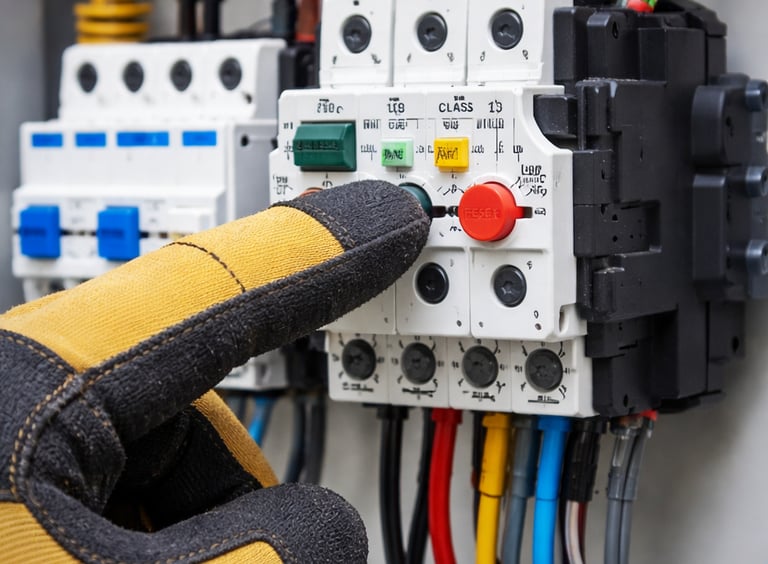
The relay must be reset, either manually using a reset button or automatically, depending on its design.
Role of Overload Relay in Motor Control
Motor Protection: Prevents overheating and insulation damage caused by overload.
Selective Tripping: Trips only during overload, not during momentary high starting currents.
Integration with Starter: Installed after the contactor in a DOL starter, star-delta starter, or any motor starter.
System Reliability: Ensures longer motor life and reduces downtime.
Typical Control Circuit with Overload Relay
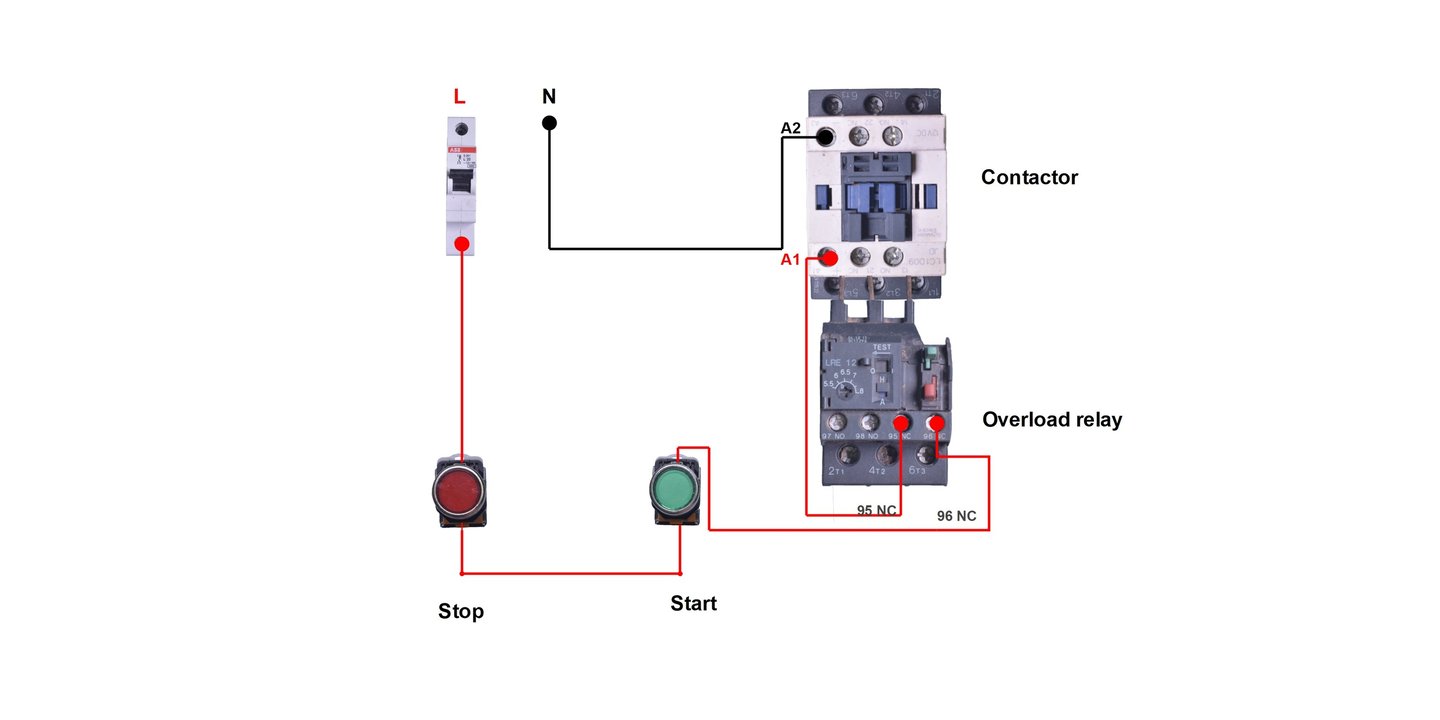
In a DOL starter control circuit, the overload relay is wired in series with the contactor coil:
Common Reasons Overload Relays Trip
An overload relay trips when the motor draws more current than it should for a certain period. This is a protection feature to prevent motor damage. Below are the most common causes:
1) Incorrect overload setting
If the overload current setting is too low compared to the motor's rated current, the relay will trip even when the motor is operating normally.
2) Motor overload or mechanical jam
When the motor drives a heavy load or something is blocking the shaft, current increases and the overload trips to protect the windings.
3) Phase loss or voltage imbalance
In three-phase motors, losing one phase causes high current on the remaining phases, which quickly triggers the overload.
4) Frequent starting
The starting current is high. If the motor starts too often without enough cooling time, the overload may trip.
5) Motor bearing or mechanical problems
Worn bearings or tight mechanical parts increase motor load and current draw.
How to Reset an Overload Relay Safely
Before resetting an overload relay, always find the cause of the trip.
Step-by-step:
Switch OFF the power supply.
Check if the motor is hot — allow it to cool.
Inspect the load for mechanical blockage.
Confirm overload current setting matches motor nameplate.
Press the reset button (manual or automatic, depending on type).
Restart the motor and monitor current.
If it trips again immediately, do not keep resetting — investigate the fault first.
L1 - Stop Button NC - Overload Relay NC - Start Button NO - Contactor Coil - Neutral
Stop Button (NC): Stops the motor when pressed.
Overload Relay (NC): Opens automatically under overload, stopping the motor.
Start Button (NO): Starts the motor when pressed.
Advantages of Using Overload Relays
Affordable and easy to install.
Adjustable current settings to match motor ratings.
Provides time-delayed tripping suitable for induction motors.
Ensures protection without unnecessary interruptions.
Applications
Overload relays are used in almost every motor control application, including:
Pumps
Fans and blowers
Compressors
Conveyors
Machine tools
Agricultural motors
Conclusion
The overload relay is a vital component in motor control systems. Protecting motors from prolonged overload currents prevents damage, downtime, and costly repairs. Whether used in a DOL starter or advanced motor control setups, overload relays ensure both safety and efficiency in electrical systems.

Insights
Connect
david@elektreca.com
+254786927909
© 2026 ELEKTRECA.COM | Privacy Policy | Terms of Service | Disclaimer